




















Introduction
From the synchronized tap of a thousand feet to an intimate, soul-baring ballad, the movie musical is a genre that refuses to stay quiet. It is a unique cinematic art form where emotion bursts forth in song and story is advanced through dance. This creates a heightened reality that has captivated audiences for nearly a century.
This article traces the vibrant journey of the movie musical from its polished, studio-system origins to its modern resurgence. We culminate with a look ahead at the innovative hits shaping 2026 and beyond. By exploring how each era’s musicals reflect broader technological and cultural shifts, we uncover more than film history. We reveal the changing heartbeat of popular culture itself.
The Golden Age: Studio Spectacle and Narrative Integration
The 1930s through the 1950s represent the undisputed Golden Age of the movie musical. Major studios like MGM perfected the form, producing lavish escapes that offered glittering fantasy during the Great Depression and post-war years. The formula relied on star power, breathtaking choreography, and technically ambitious sequences.
As film scholar Jane Feuer argues, these films created a “myth of entertainment,” presenting song and dance as a utopian solution to real-world problems. Studios produced over 100 major musicals in this period, with MGM’s output becoming synonymous with quality and innovation.
The Freed Unit and the “Integrated” Musical
At MGM, producer Arthur Freed assembled a legendary team—including director Vincente Minnelli and stars like Gene Kelly and Judy Garland—that revolutionized the genre. They pioneered the integrated musical, where songs and dances emerged naturally from the plot to deepen character development.
In Singin’ in the Rain, the numbers were the narrative engine. Kelly’s iconic splash through puddles is a pure, cinematic expression of joy that dialogue alone could never achieve. His choreography used the entire cinematic space as his partner.
This era also established enduring sub-genres, each with a distinct appeal:
- The Backstage Musical: Films like 42nd Street (1933) revealed the drama behind the curtain.
- The Romantic Comedy Musical: The Band Wagon (1953) blended witty dialogue with show-stopping numbers.
- The Folk Musical: Oklahoma! (1955) integrated song into a community’s story.
Technological Innovation as a Storytelling Tool
Golden Age musicals were at the forefront of film technology. The adoption of three-strip Technicolor became a character in its own right. Films like The Wizard of Oz (1939) used vibrant, expressive palettes to create distinct emotional worlds, requiring meticulous planning in costuming and set design.
Choreographers like Busby Berkeley used the camera inventively. His famous kaleidoscopic, overhead geometric patterns transformed dancers into pure cinematic abstraction. As Berkeley himself noted:
“I didn’t need stars. I used girls as patterns, as living mosaics.”
His techniques were not just spectacle; they represented an early form of pure visual music, where form and movement were the primary narrative drivers. This innovative approach to cinematic choreography is documented in film history archives like those from the Library of Congress National Film Registry.
The Decline and Reinvention: The 1960s to the 1990s
As studio systems crumbled and audience tastes shifted toward gritty realism, the traditional musical fell out of favor. Expensive roadshow epics like Hello, Dolly! (1969) flopped. However, this period was not an end, but a necessary metamorphosis. The musical found new life by adapting to new cultural currents.
The Rock Musical and Counter-Culture Influence
The genre was revitalized by tapping into the youth and counterculture movement. Films like The Rocky Horror Picture Show (1975) and Grease (1978) incorporated rock ‘n’ roll and a rebellious spirit. Rocky Horror became a cult phenomenon through audience participation, transforming the movie-going experience into an interactive, midnight ritual.
The success of Grease and Rocky Horror proved that the musical could evolve from a studio product into a participatory, youth-driven cultural event.
This era also saw the rise of the auteur-driven musical. Director-choreographer Bob Fosse brought a distinct, psychologically complex style to Cabaret (1972). The film used its musical numbers strictly within the diegetic confines of the Kit Kat Club to comment on the rising darkness of Nazi Germany. Fosse’s choreographic signature was a visual language of anxiety, directly opposing the open, optimistic physicality of Gene Kelly’s era.
The Animated Renaissance and Broadway Adaptation
The 1990s witnessed two parallel revivals. Disney’s animated renaissance, beginning with The Little Mermaid (1989), proved the integrated musical formula could be a global blockbuster strategy. Its success hinged on the “Howard Ashman rule”: songs must reveal character and advance plot—a direct inheritance from the Freed Unit.
Simultaneously, Hollywood successfully mined Broadway with adaptations like The Phantom of the Opera (2004). These often played it safe, recreating stage success rather than reinventing it for cinema. This period established a financial model where a proven stage property mitigates box office risk—a strategy still prevalent today. The enduring power and economic impact of Broadway as a source material is frequently analyzed in industry reports such as those from the Broadway League’s research division.
Era Defining Style Key Innovation Example Film Golden Age (1930s-1950s) Studio Spectacle, Integrated Narrative Technicolor, Elaborate Choreography Singin’ in the Rain (1952) Reinvention (1960s-1990s) Rock Influence, Auteur Vision Diegetic Performance, Animated Integration Cabaret (1972) Modern Resurgence (2000s-Present) Genre Hybrid, Authenticity Jukebox Format, Live-Recorded Vocals La La Land (2016)
The Modern Resurgence: Authenticity and Genre Hybridization
The 21st century has seen the movie musical explode in diversity and creative ambition. No longer bound by a single template, the modern musical seeks authenticity and freely blends with other genres, aligning with a broader media trend toward hybridity.
The “Jukebox” Musical and Biopic Wave
A dominant force has been the jukebox musical, weaving narratives around existing pop song catalogs. While Mamma Mia! (2008) prioritized pure escapism, the trend matured with biopics like Bohemian Rhapsody (2018). These films use an artist’s iconic music to tell their life story, leveraging built-in nostalgia.
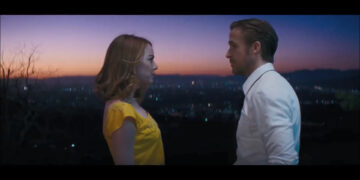
This wave expanded to include fictionalized stories built around specific musical eras. La La Land (2016) paid homage to Golden Age aesthetics while grounding them in the bittersweet realities of modern ambition. Director Damien Chazelle’s use of long, unbroken takes was a deliberate technical throwback applied to a contemporary setting.
Breaking the “Realism” Barrier
A key triumph of the modern era is convincing audiences to accept spontaneous song in a realistic context. Films achieve this through directorial style and character psychology. Tom Hooper’s Les Misérables (2012) used raw, live-recorded vocals to capture visceral, immediate performances, prioritizing emotional truth over technical perfection.
Conversely, the “performance musical” presents songs as literal performances within the story’s world, as seen in A Star Is Born (2018). Others, like Annette (2021), create their own surreal, operatic logic where singing is the native language. The genre has proven it can be as grounded or as fantastical as the story demands. This evolution in cinematic storytelling techniques is a key area of study within modern arts and cultural research.
2026 and Beyond: The Future Sound of Cinema
Looking ahead, the movie musical is poised for another creative leap, driven by technological convergence, global storytelling, and bold new artistic voices. The genre is shedding its perceived boundaries and embracing a truly multimedia future.
Technological Immersion and Interactive Storytelling
Emerging technologies like virtual production will allow for more fluid and imaginative musical sequences, blending physical and digital worlds in real-time. This could revolutionize production design. We can also anticipate exploration of interactive storytelling through branching narratives in streaming films or augmented reality (AR) experiences.
Furthermore, the use of AI in music composition and advanced de-aging technology could lead to “new” projects featuring legacy performers. This raises critical creative and ethical questions for the genre regarding authorship and artistic legacy that the industry must thoughtfully address.
Global Voices and Genre-Defying Experiments
The future is unmistakably global. The massive success of films like India’s RRR (2022) and Japan’s Belle (2021) are influencing mainstream Western productions. We will see more musicals from diverse cultural perspectives, incorporating non-Western musical traditions and narrative structures.
The genre will continue to hybridize aggressively. Expect horror musicals, sci-fi musicals, and documentary-style musicals. The core question will shift from “Why are they singing?” to “What can singing help us feel or understand about this story that other methods cannot?” This experimental spirit promises a future where the musical is less a rigid genre and more a flexible, essential mode of storytelling.
How to Explore the Movie Musical Journey
Ready to dive into the rich history and exciting future of movie musicals? Here is a practical, actionable guide to begin or deepen your exploration.
- Start with the Pillars: Watch one definitive film from each era. Compare Singin’ in the Rain (Golden Age), Cabaret (70s reinvention), The Little Mermaid (animated revival), and La La Land (modern homage). Note how the purpose of the musical number changes.
- Follow a Creative Visionary: Do a deep dive on a specific director-choreographer. Analyze the recurring themes in Bob Fosse’s work versus the romantic idealism in Gene Kelly’s films. What does their movement style say about their worldview?
- Embrace the Global Stage: Actively seek out musicals from other film industries. Stream a Bollywood classic like Lagaan or the French masterpiece The Umbrellas of Cherbourg. Observe how different cultures use song to tell a story.
- Look Forward: Follow film festivals like TIFF or Sundance, which often premiere bold new musical experiments. Research announced projects for 2025-2026. Identify which ones are taking the biggest creative risks.
FAQs
An integrated musical features songs and dances that emerge naturally from the plot and are used to develop character or advance the story, often breaking into song in a non-performance setting (e.g., Singin’ in the Rain). A backstage musical frames all musical numbers as literal performances, rehearsals, or auditions within the story’s world, with the narrative focusing on putting on a show (e.g., 42nd Street). The integrated model seeks to make singing feel like a natural expression of emotion, while the backstage model provides a realistic justification for the performance.
The decline was due to a perfect storm of factors: the collapse of the old Hollywood studio system that financed lavish productions, changing audience tastes that favored gritty realism and rock ‘n’ roll over polished studio fare, and several expensive box-office failures (like Hello, Dolly!) that made studios risk-averse. The genre didn’t disappear but reinvented itself by absorbing counter-cultural energy and later finding new life in animation and Broadway adaptations.
While virtual production is a major tool, the most impactful innovation for performance authenticity has been the use of live-recorded vocals on set, as seen in Les Misérables. This technique captures the raw, immediate emotion of an actor’s performance in the moment, often in a single take, rather than having them lip-sync to a pre-recorded studio track. It prioritizes acting over vocal perfection, helping modern audiences connect with the heightened reality of a musical number.
Not necessarily. While some criticize them for relying on pre-existing hits, their artistic merit depends entirely on execution. A great jukebox musical or biopic uses familiar songs to reveal new emotional layers, deepen character, or provide insightful commentary on the artist’s life and era. Films like La La Land (which features original songs) and Moulin Rouge! (a jukebox musical) are both highly regarded; the key is how effectively the music serves the story being told, regardless of its origin.
Conclusion
The evolution of the movie musical is a story of remarkable resilience and constant reinvention. It has navigated from the orchestrated perfection of the studio lot to the raw, intimate close-up, and now into a boundless digital future.
What remains constant is its unique power to amplify human emotion—to make the internal external in the most spectacular way possible. As we look to 2026 and beyond, the genre is not a relic but a frontier. It promises new technologies, diverse voices, and bold experiments that will continue to make our hearts soar, break, and sing along. The final number is never truly over; the curtain is always rising on the next act.
